Sodium
What varies most between athletes and sessions.
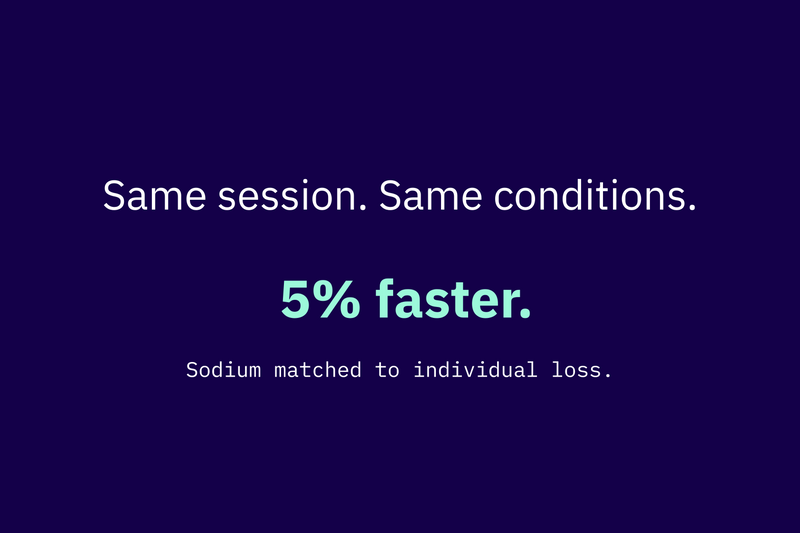
- Sodium loss can increase independently of carbs and fluid — especially in heat and longer sessions.
- Heavy sweaters can lose multiple grams of sodium per hour.
Have an Account?
Log in to check out faster.
Hydration advice often treats sodium, carbohydrates, and fluid as a single system. In reality, they behave very differently — and respond to different inputs. The Lab breaks hydration down to first principles:
This page explains the thinking behind Lytework — grounded in exercise physiology, not trends.
Sweat is not just water.
During exercise, the body cools itself by secreting sweat from the skin.
That sweat contains electrolytes — with sodium being the primary ion lost.
Crucially, sweat composition varies widely between individuals and conditions.
Typical sweat values during endurance exercise:
Sweat rate: ~0.5–2.5 L per hour
Sweat sodium concentration: ~20–80 mmol/L(≈ 460–1840 mg sodium per litre)
This means two athletes doing the same session can lose multiple grams of sodium difference per hour.
Carbs and fluids are the base. Sodium is adjustable.
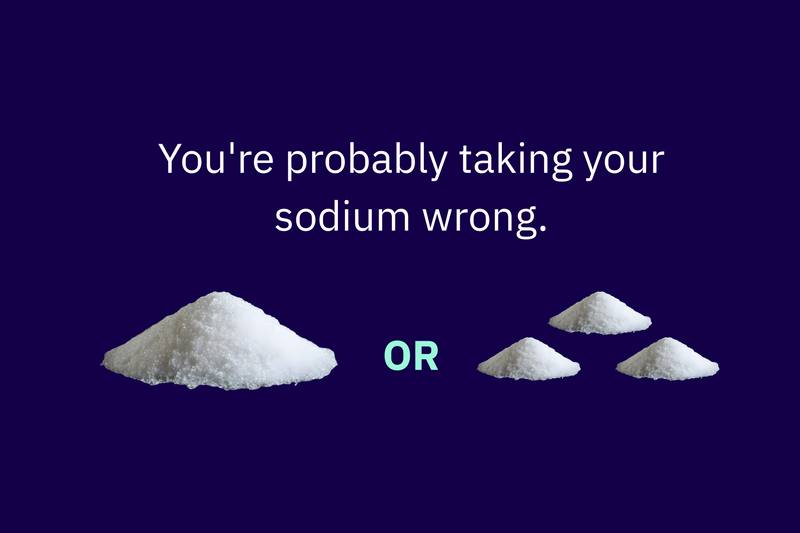
Most fueling strategies lock sodium into drinks or gels. That works until conditions change — heat rises, sweat rate increases, or tolerance drops.
Lytework separates sodium from carbs and fluid, so you can adjust what actually needs adjusting — without over-drinking, over-fueling, or flavour fatigue.
Precision, not guesswork.
General guidance only. Individual needs vary by sweat rate, temperature, intensity, and tolerance.
Hydration imbalance during exercise is not a single concept — it has two distinct physiological components that affect performance and fluid regulation:
Both occur through sweat, but they do not behave the same way, and they have different effects on the body.
Mild dehydration (≤2% body mass loss) does not always impair performance, whereas sodium depletion can disrupt plasma volume, neuromuscular function, and perceived exertion even when fluid intake is adequate.
Dehydration refers to the loss of body water when fluid loss (primarily from sweat) exceeds fluid intake. It is a common consequence of prolonged exercise, especially in hot and humid conditions. As dehydration progresses, cardiovascular strain increases, the rating of perceived exertion rises, and endurance performance is consistently impaired when losses exceed ~2% of body mass. For example, meta-analyses have shown that even modest dehydration increases heart rate and perceived effort, and can degrade endurance outcomes in athletes.
Sodium depletion refers to loss of sodium ions in sweat. While sodium is always present in sweat, the amount lost varies widely between individuals and conditions. Studies measuring sweat sodium in athletes report whole-body sweat sodium concentrations ranging approximately from 17 mmol/L to over 100 mmol/L, with typical average values in the 30–60 mmol/L range across sports and environments. This means that two athletes sweating the same volume of fluid can lose very different amounts of sodium.
Sodium is the primary electrolyte in sweat, and it plays a critical role in fluid balance, nerve function, and muscle contraction. Because the body tightly regulates blood sodium concentration (typically ~135–145 mmol/L), losing significant amounts of sodium without replacement — especially if water intake outpaces sodium replacement — can dilute plasma sodium and contribute to disorders such as exercise-associated hyponatremia (EAH).
Treating dehydration and sodium depletion as a single phenomenon ignores how differently the body manages water versus electrolytes:
Research shows that athletes may tolerate moderate dehydration reasonably well, but significant sodium depletion can affect performance indirectly through fluid balance, plasma volume, and neuromuscular function.
Furthermore, sweat physiology is highly variable. Sweating rates alone often range from ~0.5 to >2 L per hour in athletes, and associated sodium loss depends on both sweat volume and individual sweat composition.
This scientific distinction is why hydration recommendations for endurance sport often include sodium alongside fluid, and why more precise electrolyte strategies — ones that consider individual sweat profiles rather than fixed drink formulas — are increasingly discussed in sports physiology literature.
Hydration products are commonly designed as fixed formulas that combine fluid, carbohydrates, sodium, and flavour into a single ratio. While this approach is convenient, it assumes that the body’s needs for water, energy, and electrolytes scale together.
Exercise physiology suggests otherwise.
During endurance exercise, the major components of fuelling and hydration are governed by different physiological signals:
These variables do not rise or fall in parallel.
As a result, a fixed drink formula that links sodium intake to carbohydrate concentration and fluid volume cannot adapt effectively when one variable changes independently — for example, when sweat rate increases due to heat without a corresponding increase in carbohydrate needs.
Research consistently shows that sweat rate and sweat sodium concentration vary widely between individuals and across sessions, even at similar workloads. Sweat sodium concentration alone has been reported to vary more than five-fold across athletes. This variability makes it difficult for any single formulation to meet electrolyte needs reliably.
In practice, this can create trade-offs:
These trade-offs are not theoretical — they are frequently observed in long-duration training and competition.
Unlike carbohydrates or fluid, sodium replacement is limited by concentration rather than volume alone. Sweat sodium losses accumulate over time and are not corrected by water intake alone. In conditions where fluid intake is high and sodium intake is insufficient, plasma sodium concentration can decline, increasing physiological stress and, in extreme cases, the risk of exercise-associated hyponatremia.
Because sodium loss scales with both sweat rate and sweat composition, fixed electrolyte concentrations often fail to match real-world losses — particularly during hot, long, or variable sessions.
The scientific literature increasingly supports flexible hydration strategies that allow athletes to adjust sodium independently of carbohydrate intake and fluid volume. This approach reduces the need to compromise one physiological requirement in order to meet another.
Rather than relying on a single, fixed solution, hydration becomes a system — one that responds to changing conditions, individual sweat characteristics, and session demands.
(Independent scaling of electrolyte replacement)
Sodium behaves differently to both fluid and carbohydrate during exercise.
Where fluid intake is largely regulated by thirst and thermoregulation, and carbohydrate intake is constrained by exercise intensity and gastrointestinal tolerance, sodium loss is driven by sweat physiology — a process that varies widely between individuals and environments.
Total sodium loss during exercise is determined by three interacting variables:
Importantly, these variables are not reliably predicted by workload, carbohydrate intake, or fluid consumption.
Whole-body sweat testing studies consistently demonstrate large inter-individual variability in sweat sodium concentration. Reported values range from approximately 17 mmol·L⁻¹ to over 100 mmol·L⁻¹, even among trained athletes performing similar tasks. This means that two athletes exercising under the same conditions can lose several grams of sodium difference over the course of a long session.
(Baker et al., 2016; Baker & Jeukendrup, 2017)
Replacing sweat losses with water restores volume but does not restore electrolyte balance. When fluid intake matches or exceeds sweat loss while sodium intake remains insufficient, plasma sodium concentration may decline.
The scientific literature distinguishes clearly between rehydration (restoration of body water) and electrolyte replacement (restoration of sodium and other ions). These processes overlap but are not interchangeable.
(Shirreffs & Maughan, 1998)
Under prolonged or hot conditions, failure to replace sodium alongside fluid can increase physiological strain by reducing plasma volume and altering fluid distribution between compartments. This effect is independent of carbohydrate availability.
Because sodium loss can change independently of both fluid needs and carbohydrate requirements, bundling sodium into fixed drink concentrations introduces a constraint.
Increasing sodium intake via flavoured or carbohydrate-containing drinks often requires increasing fluid or carbohydrate intake beyond what is physiologically appropriate for the session. This can lead to trade-offs such as:
From a physiological perspective, sodium is therefore the variable most likely to require independent adjustment as exercise conditions change.
Current endurance hydration research increasingly supports flexible strategies that allow sodium intake to be adjusted independently of fluid and carbohydrate intake, particularly during long-duration or heat-exposed exercise.
Rather than prescribing a single fixed formula, this approach recognises sodium as a controllable variable — one that responds to sweat loss, duration, and environment rather than flavour or energy needs.
This principle underpins contemporary discussions of individualised hydration strategies in endurance sport physiology.
Sodium plays a central role in maintaining extracellular fluid balance, plasma volume, and neuromuscular function during exercise. When sodium losses through sweat are not adequately replaced, a series of physiological responses can emerge — particularly during prolonged exercise or in hot environments.
These effects are not typically acute medical events in healthy athletes, but they are performance-relevant constraints that influence cardiovascular stability, perceived effort, and the ability to sustain output over time.
Sodium contributes to the maintenance of plasma volume during exercise. When sodium loss is not matched with intake, plasma volume can decline more rapidly, even when fluid intake is sufficient.
Reductions in plasma volume are associated with:
These changes increase physiological strain and can reduce endurance capacity, particularly in the heat.
(Montain & Coyle, 1992; Casa et al., 2000)
Sodium loss can indirectly impair thermoregulation by reducing the body’s ability to retain and distribute fluid effectively. As plasma volume declines, skin blood flow and sweating efficiency may be compromised, increasing thermal strain.
Under hot conditions, this can accelerate rises in core temperature and increase perceived exertion, even when exercise intensity is unchanged.
(Sawka et al., 2007)
As cardiovascular and thermal strain increase, athletes often experience a rise in rating of perceived exertion (RPE). Elevated RPE can influence pacing decisions, increase the likelihood of premature fatigue, and reduce the ability to sustain planned intensity.
Research indicates that electrolyte imbalance — particularly when combined with dehydration — can contribute to increased subjective effort during endurance exercise.
(Cheuvront & Kenefick, 2014)
When fluid intake is high and sodium intake is low, plasma sodium concentration may decline. This dilution places additional stress on fluid regulation mechanisms and, in extreme cases, can contribute to exercise-associated hyponatremia (EAH).
While EAH is rare and multifactorial, the literature consistently notes that replacing fluid without adequate sodium — especially over long durations — increases physiological risk.
(Hew-Butler et al., 2015)
The physiological consequences of sodium depletion are influenced by:
For short or cool-weather sessions, sodium loss may be modest and easily managed. For longer or hotter sessions, small mismatches between sodium loss and replacement can accumulate and meaningfully affect performance sustainability.
The research suggests that sodium replacement is not simply about avoiding medical complications, but about maintaining physiological stability during prolonged exercise. Adequate sodium intake supports plasma volume, thermoregulation, and exercise tolerance — particularly under conditions of high sweat loss.
This understanding forms the basis for hydration strategies that consider sodium as a distinct variable, rather than assuming fluid replacement alone is sufficient.
Despite decades of hydration research, there is no single sodium intake recommendation that applies universally during exercise. This is not a limitation of the science — it reflects the biological variability of sweat physiology.
Whole-body sweat testing studies consistently demonstrate large differences in both sweat rate and sweat sodium concentration between individuals, even among athletes of similar size, fitness, and sport. Importantly, this variability persists across sessions and environments.
Sodium loss during exercise is influenced by multiple interacting factors, including:
Because these factors interact, sodium loss cannot be reliably predicted from body size, fitness level, or sweat rate alone.
Studies measuring sweat sodium concentration report values ranging from approximately 17 mmol·L⁻¹ to over 100 mmol·L⁻¹, with both inter- and intra-individual variation observed. This means two athletes losing the same volume of sweat may lose several grams of sodium difference over the same session.
(Baker et al., 2016; Baker et al., 2022)
Because sodium losses vary widely, fixed sodium recommendations — whether expressed per hour, per litre, or per session — are unlikely to suit all athletes or all conditions.
The scientific literature therefore tends to emphasise ranges, guidance, and adaptability, rather than absolute targets. Even consensus statements on hydration avoid prescribing universal sodium intakes, instead highlighting the need to consider individual sweat losses and exercise context.
(Shirreffs & Maughan, 1998; Hew-Butler et al., 2015)
From a physiological standpoint, the goal of sodium replacement is not to achieve a precise number, but to reduce mismatch between sodium loss and intake over time — particularly during long or heat-exposed sessions.
This perspective aligns with modern endurance hydration research, which increasingly supports individualised strategies that allow athletes to adjust sodium intake based on observed sweat loss, conditions, and tolerance, rather than adhering to rigid formulas.
There is no universal sodium number because there is no universal sweat profile.
Sodium requirements during exercise exist on a spectrum shaped by individual physiology and environmental demand. Recognising this variability — and allowing flexibility in sodium intake — is central to contemporary, evidence-based hydration strategies.
(Peer-reviewed literature)
The concepts discussed in The Lab are grounded in established research in exercise physiology, sweat composition, and endurance hydration. The references below are provided for transparency and further reading, and reflect the scientific literature underpinning modern approaches to fluid and sodium management during exercise.
These sources are provided to support the physiological principles discussed on this page. They are not intended to prescribe individual hydration strategies, but to explain how sodium and fluid balance are managed during endurance exercise under varying conditions.
This page explains physiological principles. It is not a one-size-fits-all prescription.
General guidance only. Individual needs vary with sweat rate, environment, intensity, and tolerance.
Sweat loss isn’t just water. Sodium loss varies widely between athletes and conditions.
Unlike carbs or fluid, sodium needs often increase independently — especially in heat, during long sessions, or for heavy sweaters.
Separating sodium allows you to adjust what actually changes, without forcing changes to everything else.
SALT is a decision framework — not a prescription. It helps you decide what to adjust when conditions change, without forcing changes to everything else.
What varies most between athletes and sessions.
Respond to thirst and conditions.
Fuel the work, not the weather.
Small early adjustments beat late fixes.
Understanding the science helps explain why sodium needs vary.
The calculator helps you estimate where to start — then refine through training.